🗓️
April 2022
CanApply CRM
Designing a Multi-Team Internal CRM for the International Student Journey
Client
CanApply, NovaVidya Inc.
Year
2021
Scope
Product Designer
The Spark: Why We Needed a CRM
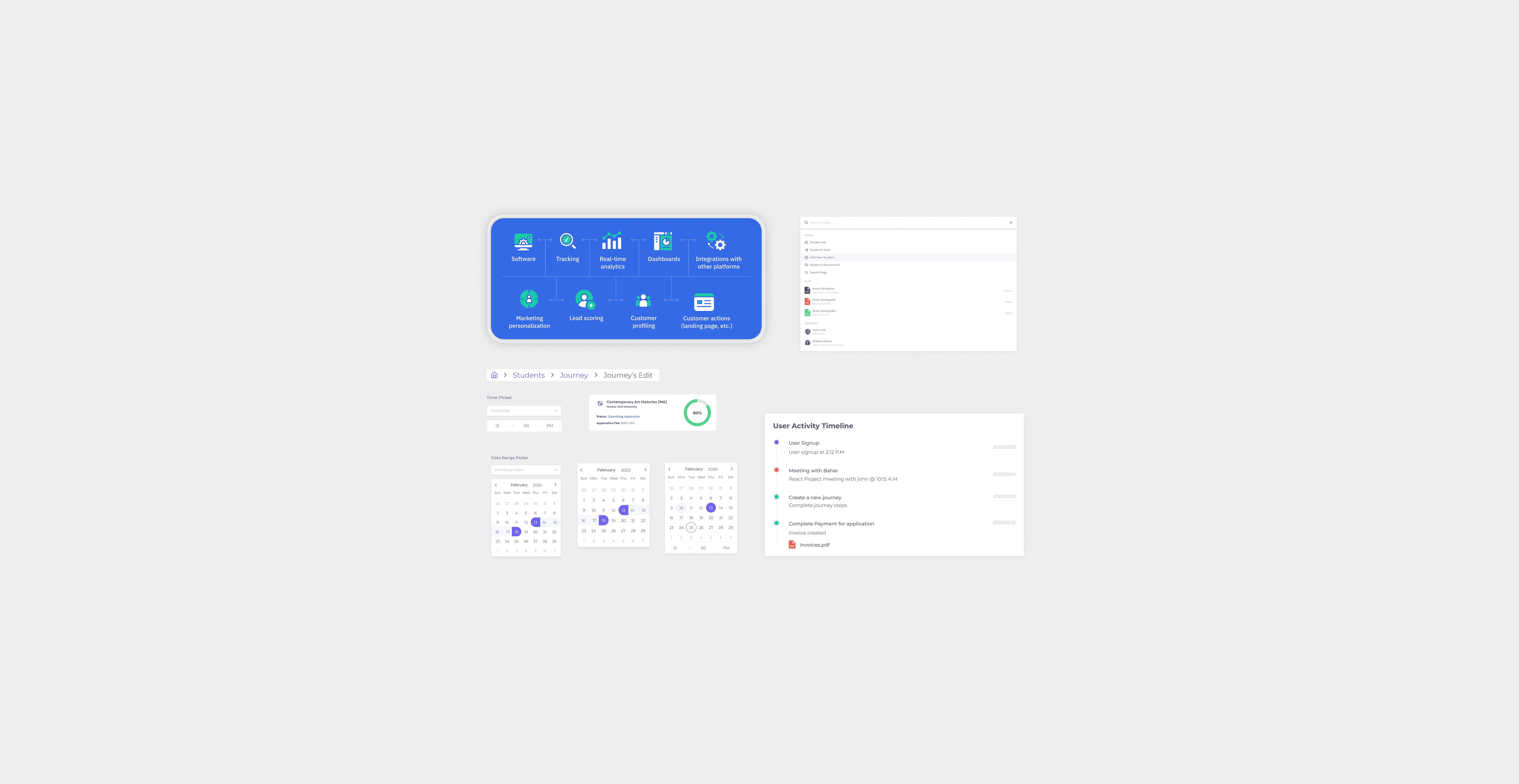
As CanApply welcomed more students from around the world, managing each unique application journey became increasingly complex. Leads poured in from webinars, Instagram, emails and different forms, while our teams juggled thousands of ongoing conversations across chats, calls, and emails, without a shared system.
Every department, Customer Service, Marketing, Admissions, and Advising, relied on its own mix of tools, from spreadsheets and sticky notes to direct messages and email threads. Before long, we found ourselves unable to answer even the most basic questions with confidence:
Has this student booked a consultation?
Did they attend the last webinar?
Who was the last person to speak with them?
Are they ready to apply?
Where are their documents stored?
Leads were often just a collection of form submissions, Google Sheets, WhatsApp, and Telegram groups, with the connection between our tech systems and teams, marketing, customer service, and sales, being ad hoc and suboptimal, so the need for a CRM was growing, like many other startups.
It became clear: we didn’t just need better tools, we needed Customer Relationship Management. A single, reliable source of truth that enabled consistent follow-ups, transparent workflows, and coordinated support across all teams.
It was obvious that our team needed to choose between using existing CRM services or developing a custom solution in-house. We decided to build our own system because it could be fully customized to meet the company’s specific needs. With an in-house technical team, development costs were lower than relying on external services, and the system could remain flexible, allowing the sales and customer service teams to adapt and improve it over time as requirements evolved.
Listening Closely: Identifying the Real Pain Points
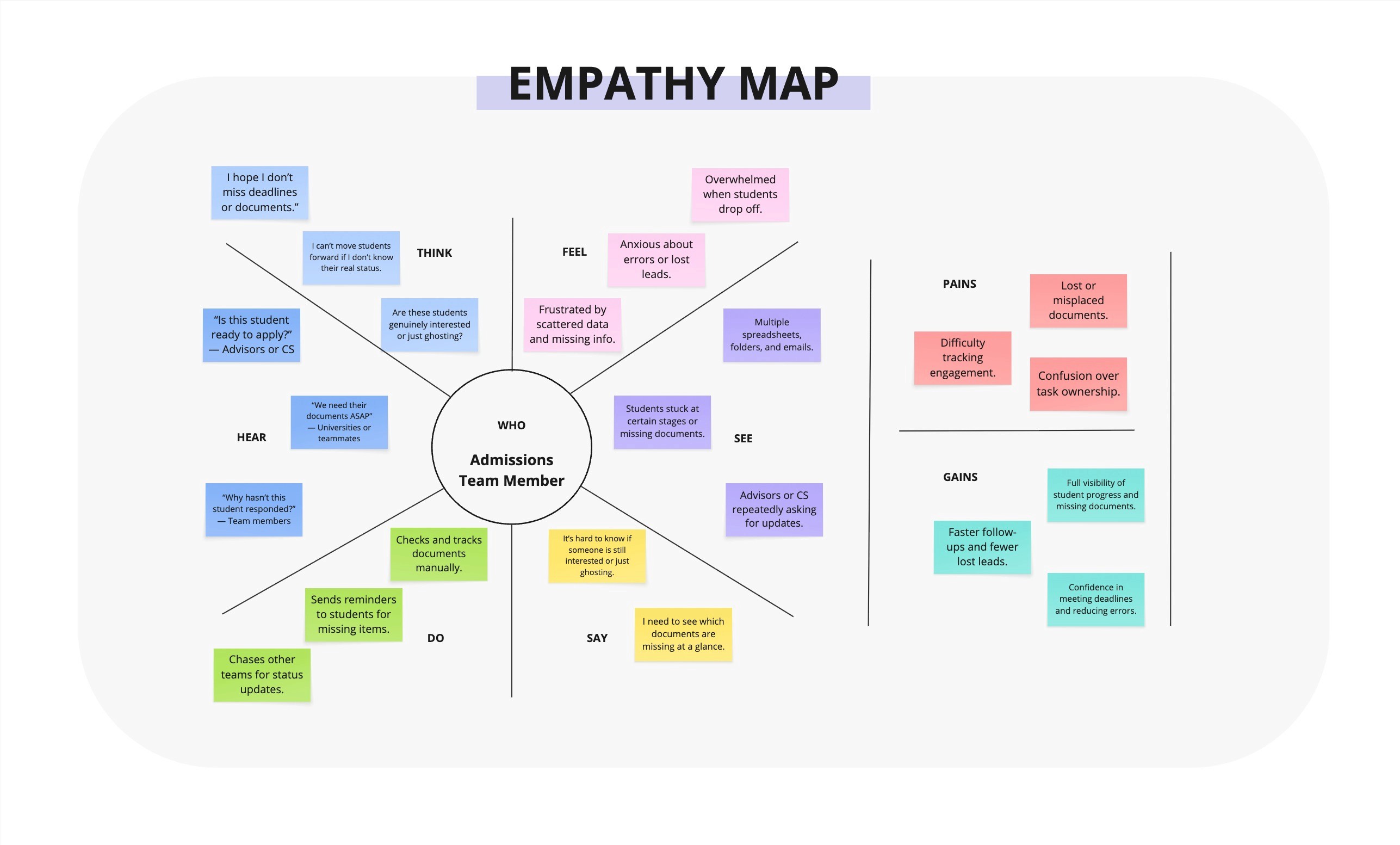
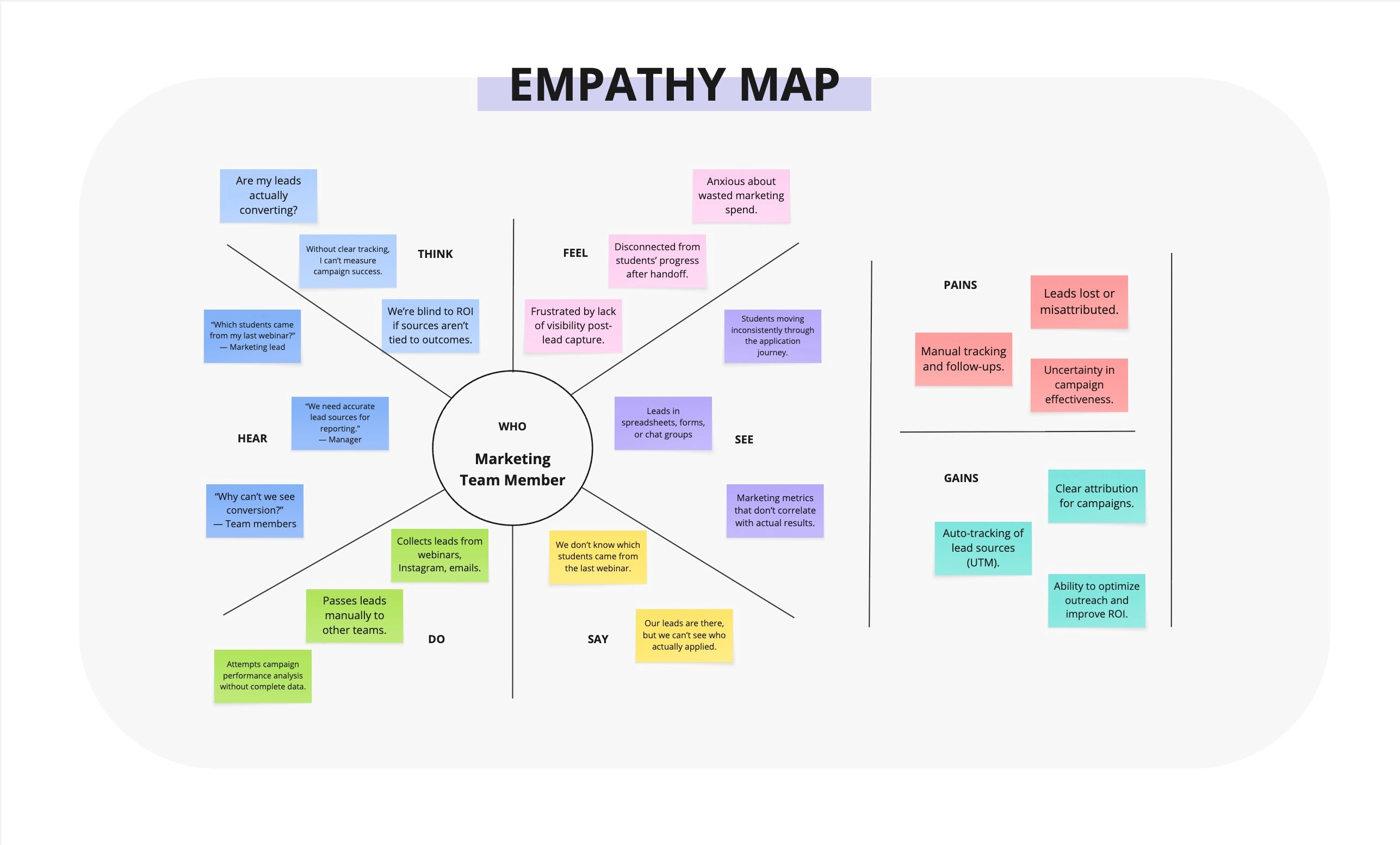
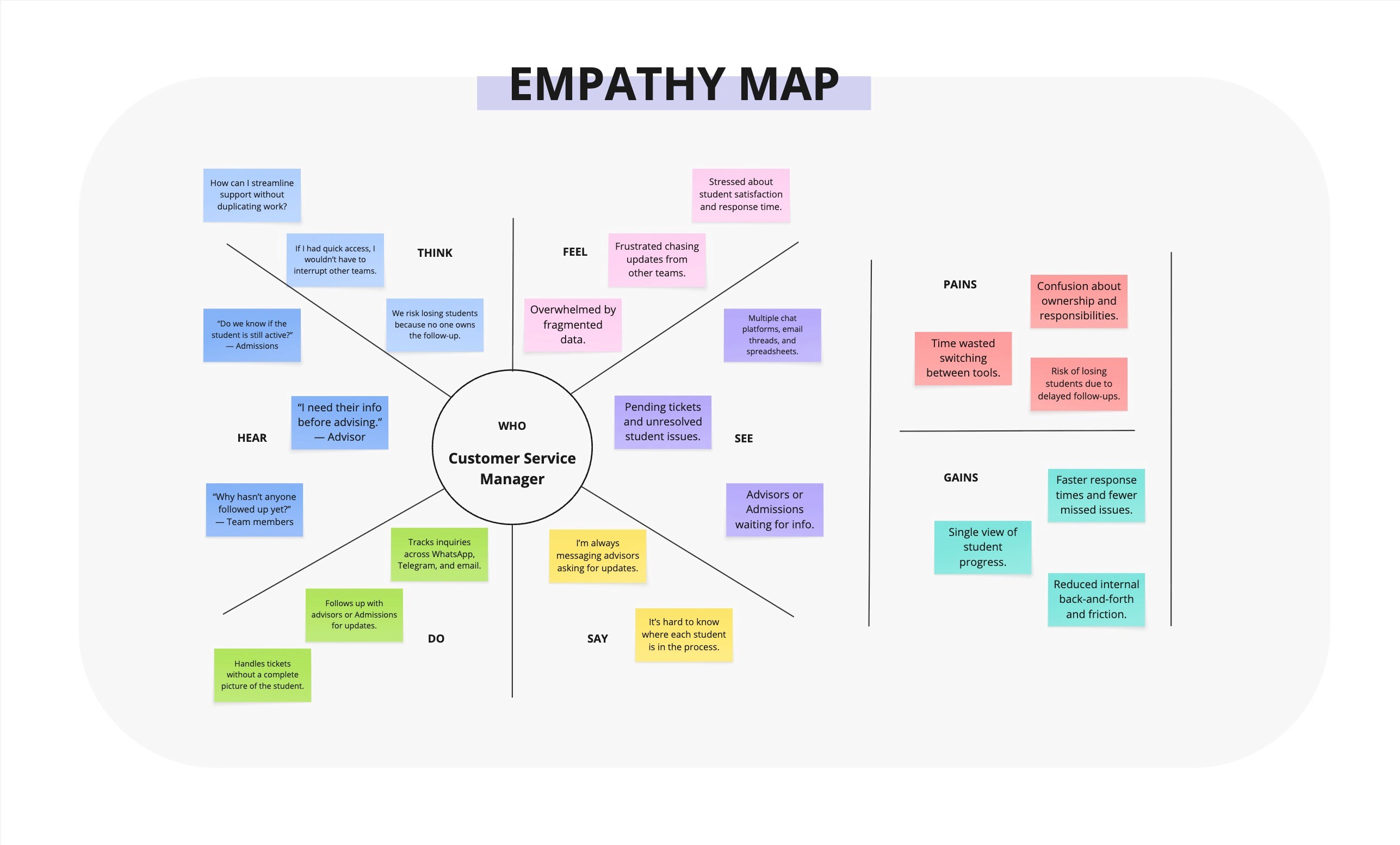
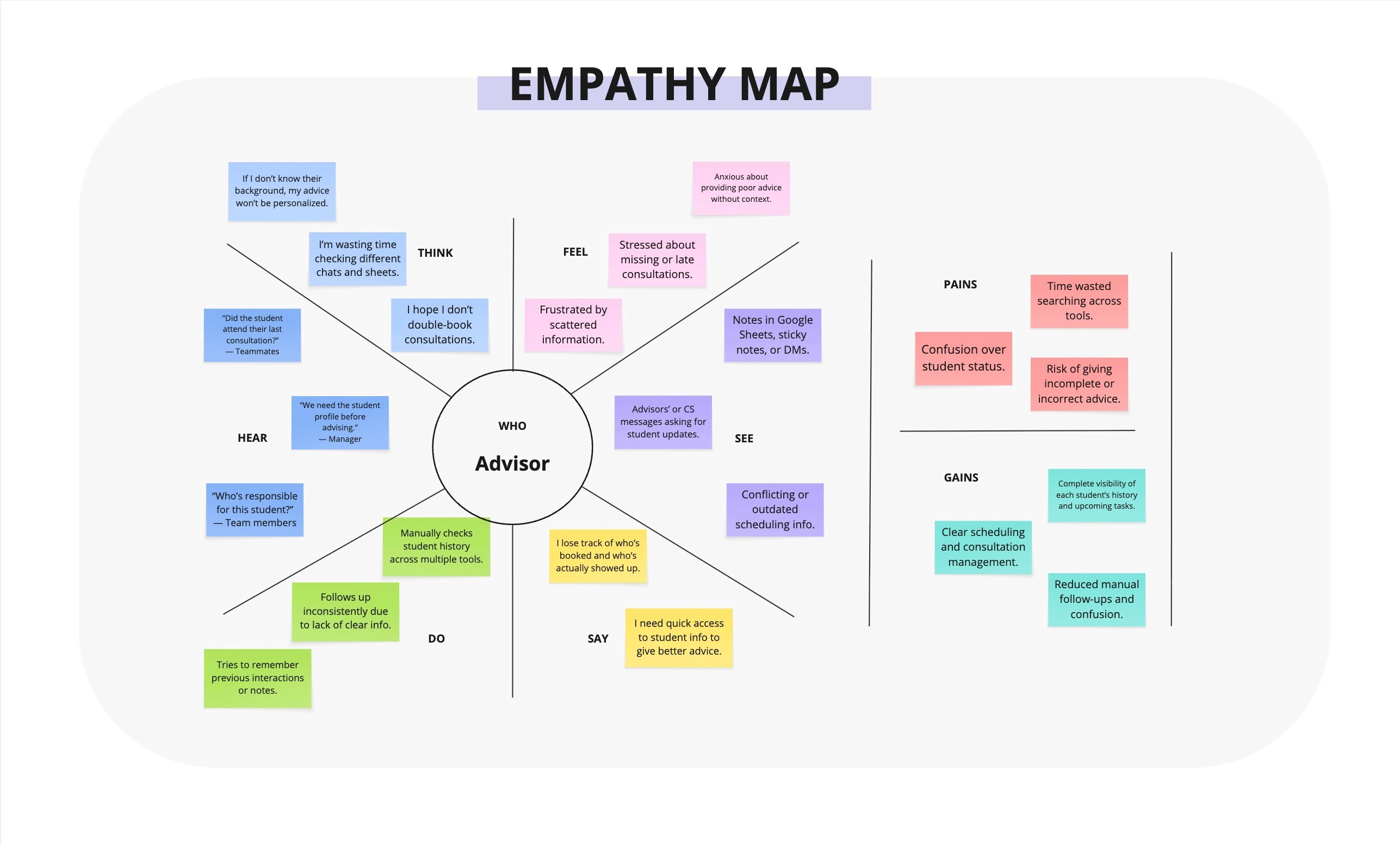
Before jumping into design, we needed to understand how each team worked and where the friction was happening. It also became clear that team structures and responsibilities needed to be more defined and transparent to avoid overlap, confusion, and dropped tasks.
We conducted stakeholder interviews with the Customer Service, Admissions, Marketing, and Advisor teams. We also analyzed past conversations and observed real-time workflows to get a complete picture of the pain points.
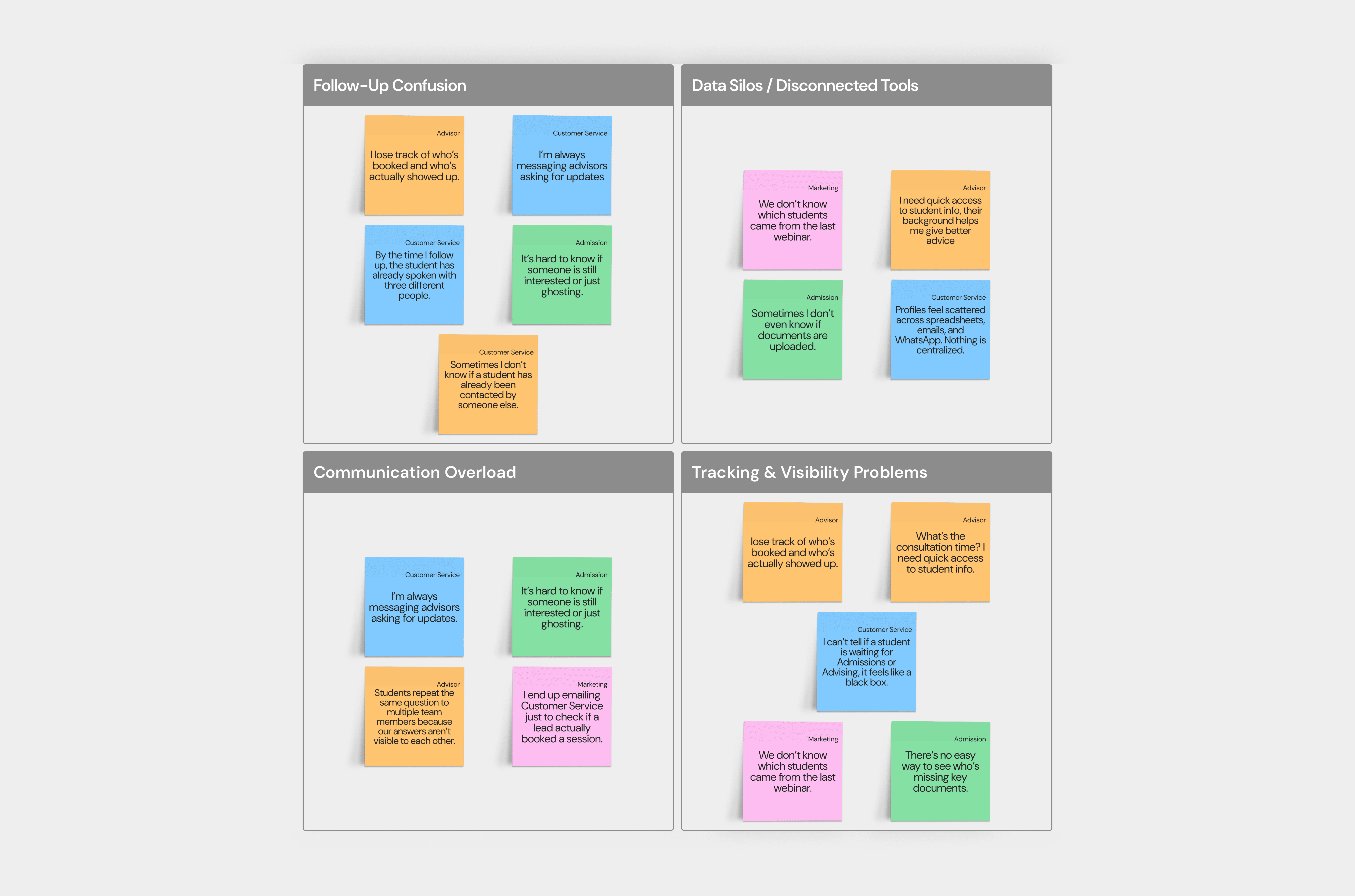
Here’s what we heard:
🗣 “I lose track of who’s booked and who’s actually showed up.” — Advisor Manager
🗣 “What’s the consultation time? I need quick access to student info, their background helps me give better advice.” — Advisor
🗣 “We don’t know which students came from the last webinar.” — Marketing team
🗣 “I’m always messaging advisors asking for updates.” — Customer Service Manager
🗣 “It’s hard to know if someone is still interested or just ghosting.” — Admissions
The insight was clear: our teams were working hard, but in silos. And without a unified system, important leads were falling through the cracks.
The Goal: A CRM That Drives Action, Not Just Logs Data
Our vision wasn’t just to create a CRM that stored information, we wanted it to be an operational tool that:
Tracks leads across channels
Understands where each student is in their journey
Enables smart, timely follow-ups
Creates internal accountability
Adapts how our team treats and supports each user based on their history, behavior, and needs
Manages and sends relevant notifications to keep things moving
Adapts how our team treats and supports each user based on their history, behavior, and needs
Coordinates actions across departments
Above all: never lose sight of a potential student again.
Mapping the CRM Experience: One Journey, Many Perspectives
Because CanApply’s core mission is simplifying the university application process, the CRM needed to support this by guiding every team to help students progress smoothly through their journey.
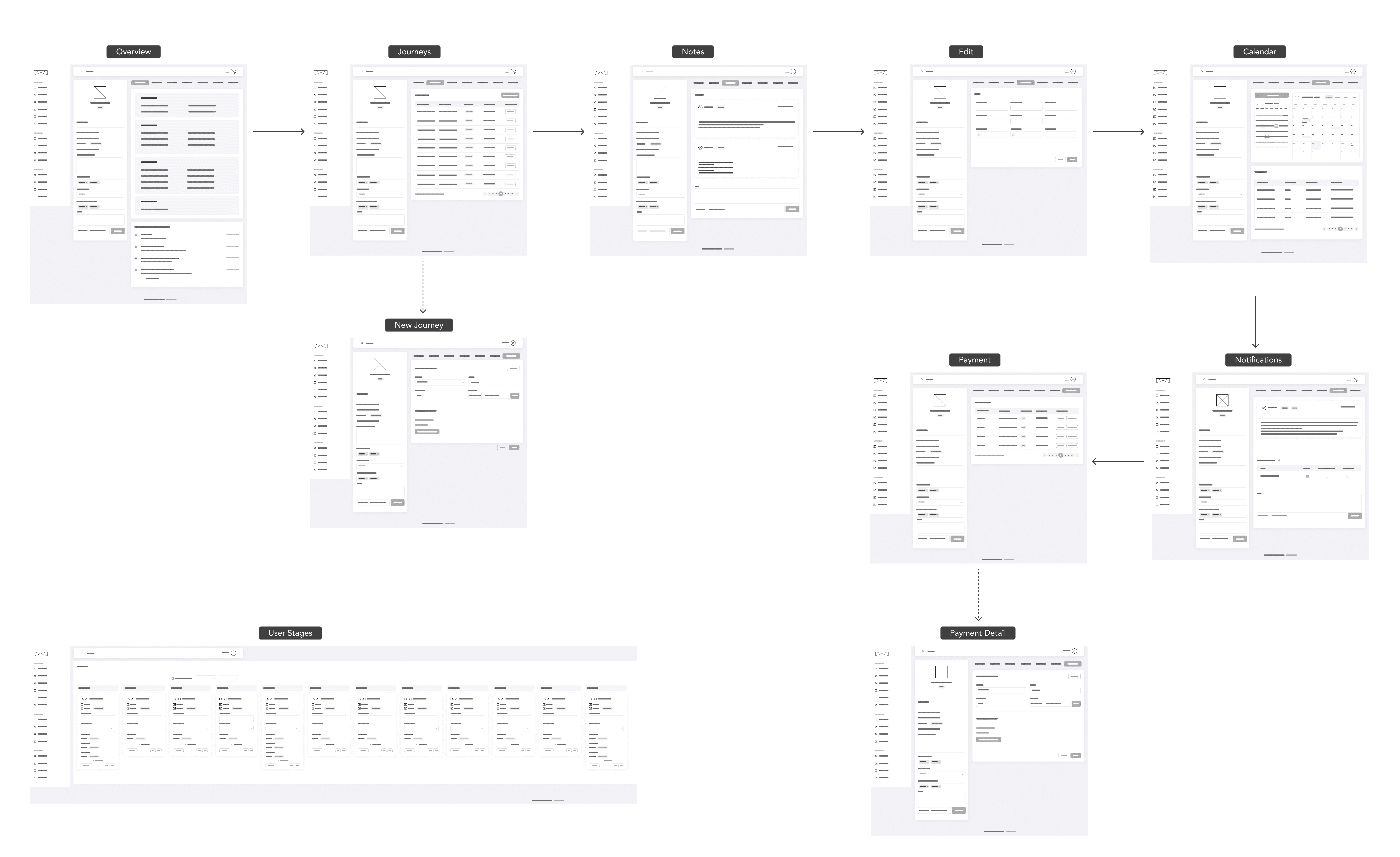
We mapped the entire student experience, from initial interest (webinar signup or Instagram inquiry) to application submission. Then we layered key actions on this journey:
Captured leads and tracked their source (Marketing Team)
Scheduled and hosted consultations (Advisors)
Answered questions and guided users through profile completion (Customer Service)
Checked document readiness and submission status (Admissions Team)
This journey mapping and interaction matrix revealed when handoffs occurred, what data was needed at each touchpoint, and where confusion arose.
Designing the CRM System: Making Follow-Up Frictionless
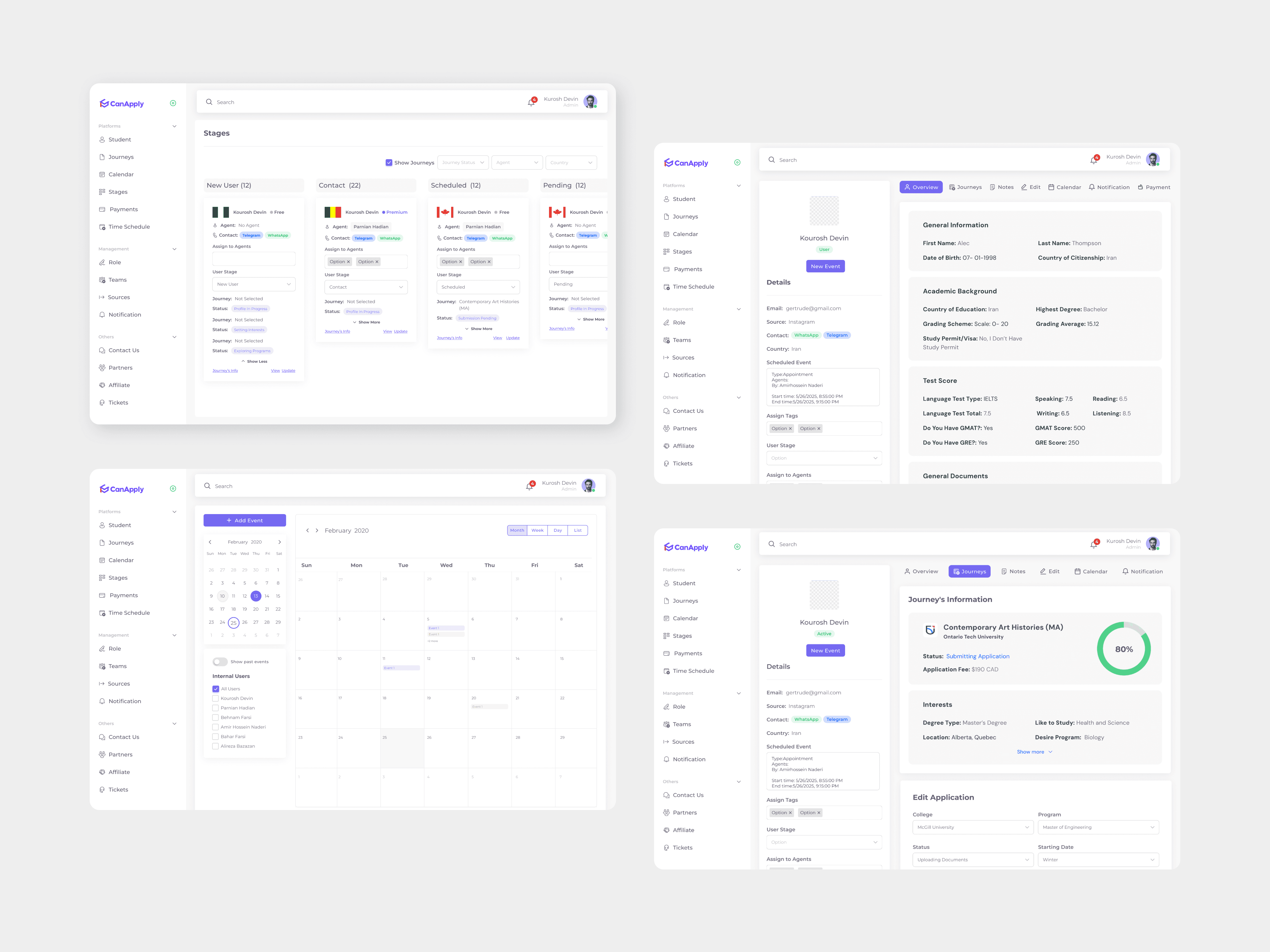
Unified Student Profiles:
We built centralized profiles for every student. These included:
Consultation history
Advisor notes
Lead source (e.g., Instagram, webinar)
Submitted documents
Next milestone or task
Notifications and reminders
All communication history and user interactions
Now, any team member, depending on their role and access level, could get a full picture of a student in seconds.
Smart Lead Stages:
To keep everyone aligned, we designed a shared lifecycle pipeline that took into account the needs of advisors, the business team, customer service, admissions, and everyone else who interacts with students directly, including the students themselves.
The pipeline included clear stages like:
New User
Contacted
Scheduled
Pending
Ready
Admission Fees
Submitted
Admitted
Study Permit
Enrollment
Commission
Closed User
Users moved through the pipeline via auto-updates and manual changes, enabling better tracking and segmentation.
This dynamic pipeline didn’t just reflect where a student was, it forecasted the next step, clarified team responsibilities, and helped distribute workloads intelligently. As a result, it enabled more strategic, timely, and effective communication across the entire student journey.
UTM-Based Source Tracking: Know Where Every Lead Comes From
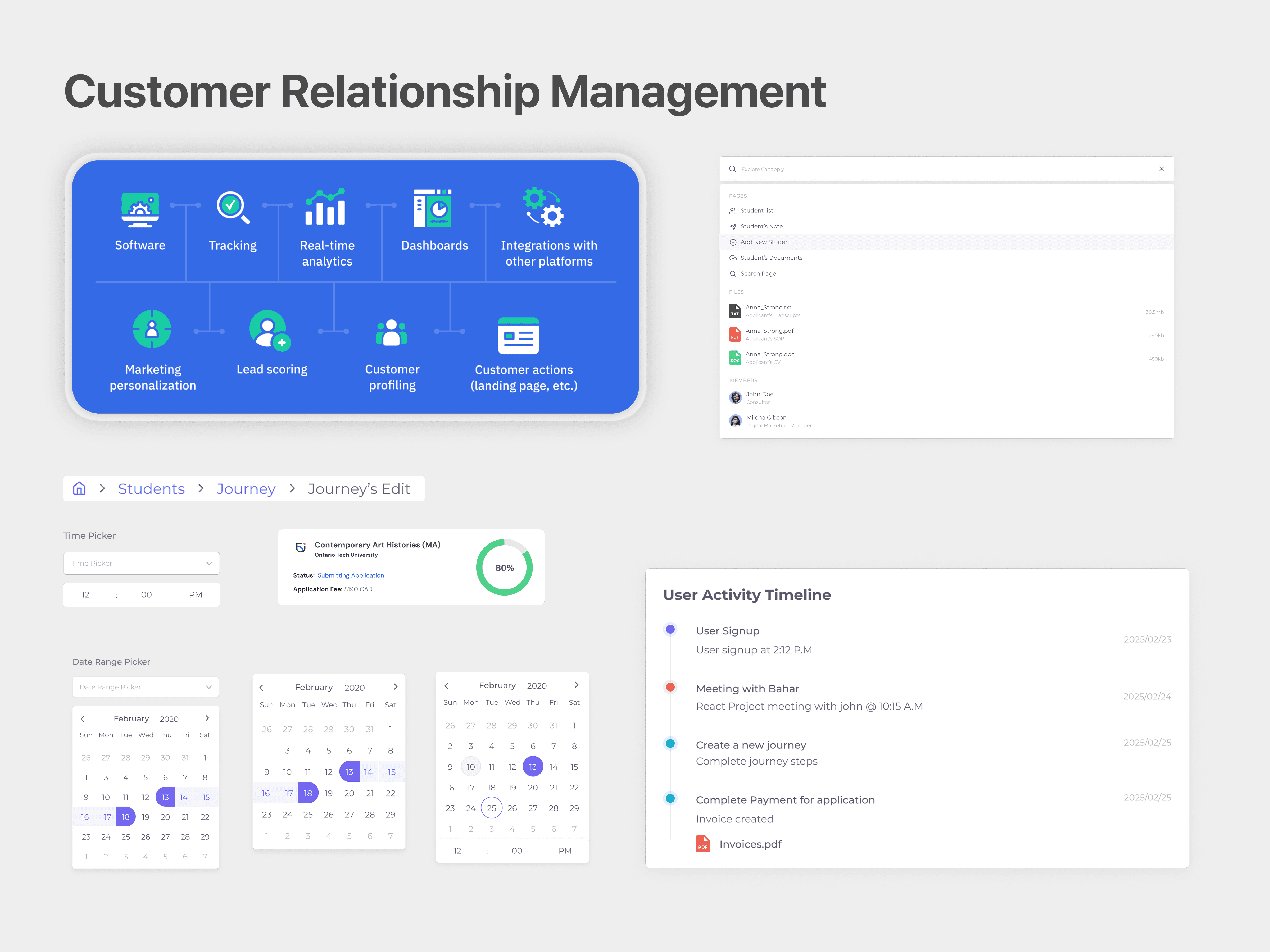
To ensure our CRM captures lead origins automatically, we implemented UTM tracking across all campaigns. Whenever a user signs up, whether from a webinar, Instagram post, or email link, their source is auto-populated in their CRM profile.
Examples of auto-set sources:
Webinar – Jan 24
Came from Instagram
Email Campaign – Spring Intake
This not only saves manual work but gives every team immediate context about the user’s journey from the very first touchpoint.
Actionable Dashboards
We created tailored dashboards for each team to surface the most relevant information at a glance:
Advisors saw upcoming consultations and no-shows to prioritize outreach.
Customer Service (CS) tracked chat volume, pending tickets, and even user-reported bugs, with a simplified version for their view and a more technical version forwarded to the Tech Team.
Marketing tracked lead sources and user engagement. For deeper insights, we implemented a separate analytics system (Metabase), customized for their KPIs, campaign performance, and UTM analysis.
Admissions viewed users with missing or incomplete documents, helping them focus on nudging high-potential applicants.
Each dashboard was designed to answer the team’s most common daily questions—reducing back-and-forth and helping everyone take faster, smarter action.
Testing, Iterating, and Learning Fast
Initial pilot testing quickly surfaced improvement opportunities that were critical to daily operations:
Advisors needed calendar sync to avoid double-booking and better control over their available times, which would be shown to students during the booking process.
Customer Service (CS) required faster search functionality along with advanced filters to quickly access specific user groups.
Since some students faced more complex challenges, CS also needed permission-based access to assist with application edits directly.
We responded with:
Google Calendar integration
Twilio - whatsapp messages
Brevo - email notification
UTM
Google Analytics and events
Bulk actions and tag management
A faster, cleaner UI and search algorithm
Early team feedback:
🎉 “Now I know who I need to call first.”
🎉 “It’s like we finally speak the same language across departments.”
🎉 “I don’t have to dig through five tools anymore.”
The Outcome: A CRM That Connects the Dots
The new CRM now gives every CanApply team member the same view of each student. It:
Simplifies daily workflows
Enables timely and personalized follow-ups
Tracks student progress in real-time
Reduces internal confusion and lost leads
More importantly, it created alignment across the organization.
When a student is ready, we know it. When they’re stuck, we help. And when they’re gone silent, we re-engage with context.
But the impact wasn’t just about better communication, it was measurable:
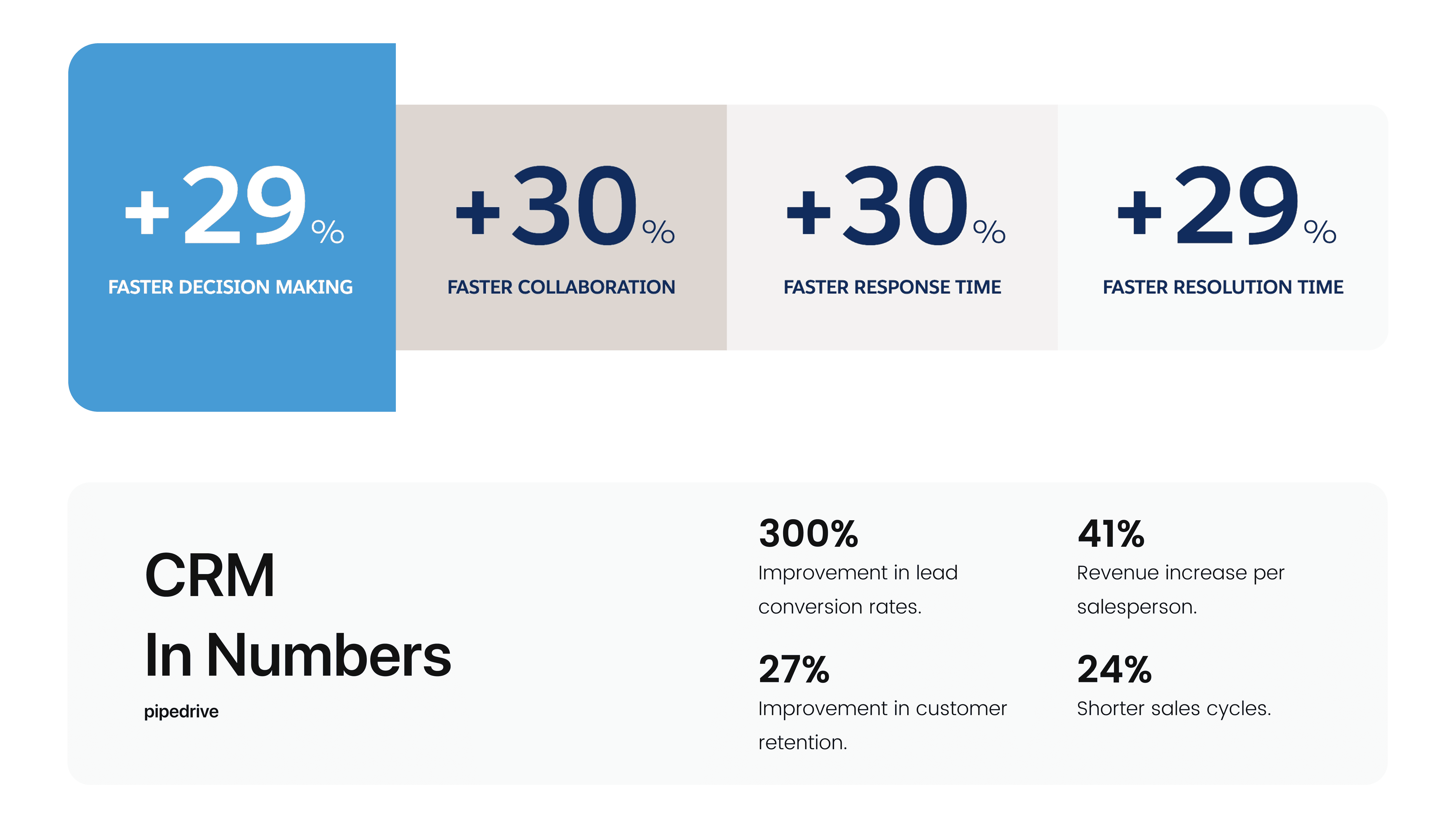
Measurable Impact in the First 3 Months:
📈 52% increase in follow-up rate within 24 hours
📉 40% reduction in missed consultation
⚡ 65% faster onboarding for new advisors
✅ 30% increase in application completion rate
🛠️ Significantly faster resolution of student issues across departments
🧹 Cleaner data across systems and records
🚀 Faster student application submissions to universities
This CRM didn’t just organize our data, it transformed how we support students.
What I Learned
A good CRM isn’t just a database, it’s Customer Relationship Management in the truest sense: a system designed to build, nurture, and act on relationships.
To get it right, we had to:
Listen deeply to every team. Design must reflect real workflows, not assumptions.
Focus on the details. Small UX improvements, like smart filters or calendar sync, drive huge impact at scale.
Use storytelling throughout. It's not just for case studies, storytelling helped us align teams around a shared vision during the design process.
In the end, our CRM didn’t just organize data, it helped teams work better together and strengthened our relationships with students.

Final Thoughts
Designing the CanApply CRM wasn’t about making something pretty. It was about clarity, collaboration, and continuity. In an organization where students rely on us to guide them through one of life’s biggest decisions, our internal tools must be just as reliable as our platform.
Now, we follow up smarter, work together better, and never lose track of a student’s journey again.